Author: Tamara Baumann

  • Green Alder Encroachment Control: Combining Mechanical Clearing with Goat Grazing

    Green Alder Encroachment Control: Combining Mechanical Clearing with Goat Grazing

    The green alder encroachment of summer pastures reduces biodiversity, forage quality, and landscape attractiveness. Goat grazing can help limit this process and restore pasture vegetation.

    The decline in agro-pastoral activities has led to an increase in the cover of green alder (Alnus viridis (Chaix) DC.) in the Alps. It is one of the most expanding shrub species in Central Europe, with negative agro-environmental impacts, such as eutrophication, greenhouse gas emissions, soil acidification, and a subsequent reduction in forage quality and pasture biodiversity. Historically, small ruminants have played a crucial role in limiting woody species expansion, but the number of goats has dropped by 80% in Switzerland since the late 19th century. In this context, cattle could help fulfil this role through trampling and consumption of shrub species.

    In this study, we examined mechanical clearing combined with grazing by goats and heifers in Swiss mountain pastures to limit green alder encroachment. In three summer pastures invaded by green alder, 28 goats (Capra grigia and chamoisée breeds) and 21 heifers (Holstein, Simmental, and Swiss Fleckvieh breeds) were allowed to graze in four plots per pasture. Each pasture included two plots for goats and two plots for heifers. For both animal types, one plot had uncut green alder shrubs, while the other had shrubs cut at the start of the season and grazed at the end of the season. Direct observations of livestock foraging behaviour were conducted to assess their preferences and the composition of their diets. Moreover, the percentage of debarking, defoliation, and resprout consumption was reassessed on alder shrubs after grazing.

    Heifers preferred herbaceous species and avoided green alder

    Herbaceous species constituted 87% of the heifers’ diets, while green alder represented less than 1% and was avoided even when highly abundant. However, heifers consumed other shrubs, such as rose, raspberry, and blueberry. The resprouts of cut green alder shrubs were consumed or trampled by heifers, but most of them were only slightly affected (less than 30% of the resprouts per shrub were affected).

    Goats fed on green alder, and they intensively debarked, defoliated, and consumed the alder resprouts

    Woody species constitute a significant part of the goats’ diets. In uncut plots, green alder accounted for up to 57% of their diet. Goats also consumed understorey vegetation in green alder stands (e.g. ferns). Unlike heifers, goats explored alder stands extensively and adjusted their diets based on available plants. Notably, 70% of the green alder branches were defoliated by goats, and 18% were debarked (with significant variation among the summer pastures). The goats also consumed almost all the resprouts of cut green alder shrubs.

    Conclusions

    • The high level of goat bark-stripping activity and the strong impact on alder resprouts suggest that repeated goat grazing, combined with mechanical clearing, could be an effective tool to limit green alder encroachment and restore pasture vegetation.
  • No Evidence of Urban-Rural Divide in the Prioritisation of Agricultural Policy Goals

    No Evidence of Urban-Rural Divide in the Prioritisation of Agricultural Policy Goals

    A new study by Agroscope and the ETH shows that there is no rural-urban divide in the prioritisation of agricultural policy goals. From very rural to very urban, the Swiss population puts economic objectives before environmental ones.

    There is a noticeable divide between the political attitudes of the urban and rural population in various policy areas – but is there also an urban-rural divide in terms of agricultural policy preferences? If so, could this lead to an urban majority (whose livelihood does not depend on agriculture) imposing its values and the resulting policy measures on a rural minority?

    A representative survey delves deep into the issue

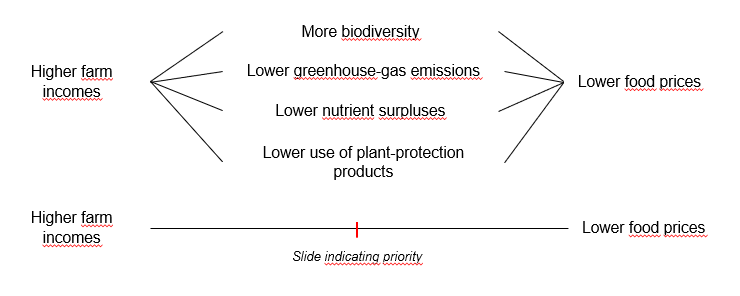
    To answer this question, Agroscope and the ETH Zurich analysed the agricultural policy preferences of 1542 respondents in three linguistic regions of Switzerland (German, French, Italian), who, according to their own statements, live in areas ranging from very rural to very urban. Of particular interest was the prioritisation by the respondent of a goal if it were to be assessed as being in direct conflict with a second goal. The survey participants were questioned on nine different pairs of goals (see graphic):

    Above: The six investigated agricultural policy goals (two economic and four environmental goals) leading to nine investigated conflicts (each economic goal vs. an environmental goal plus the two economic goals pitted against each other). Below: The comparison of the two economic goals as an example of goal prioritisation.

    Economic goals tend to be prioritised over environmental goals

    Regardless of where the respondents lived, lower food prices and higher agricultural income are prioritised over reducing greenhouse gas emissions or decreasing plant-protection product use. By contrast, reducing nutrient surpluses is more important for the majority than one of the economic goals. If an economic goal is compared with the aim of improving biodiversity, no clear preference is shown for one or the other. On average across all participants, preferences for one agricultural policy goal over another are not particularly strong.

    Only slight differences between rural and urban regions

    Agricultural policy preferences differ only slightly depending on where respondents live. Significant differences only emerge in a small number of cases, particularly with people in very rural areas, who rate improving biodiversity and reducing the use of plant-protection products as significantly more important than do respondents from other regions. People from very rural areas also rate lowering food prices as being more important than increasing farm incomes, when these two goals are presented as being in conflict with one another.

    Conclusions

    • There is no urban-rural divide in the Swiss population’s agricultural policy preferences.
    • Regardless of where the respondents live, the economic goals of agricultural policy tend to be given higher priority than environmental goals.
    • People from very rural areas are an exception to the rule, as they rate improving biodiversity, reducing the use of plant-protection products and lowering food prices as more important than do residents in less rural areas.
    • Based on these findings, policy-makers should focus on reducing trade-offs between economic and environmental goals.
  • Sustainability Levies: Which Are Preferred?

    Sustainability Levies: Which Are Preferred?

    Steering levies can change consumer behaviour. An Agroscope study focusing on a sustainability levy on food showed that social sustainability and animal welfare levies are most likely to meet with acceptance.

    Previous studies have investigated policy measures in general and sustainability labels in particular. Agroscope researchers have now tested the acceptance of sustainability levies, which are a specific type of tax. If the monies collected are used for specific purposes such as e.g. improving animal welfare, this can increase acceptance.

    First levies exist, studies on them are lacking

    Various sustainability levies already exist – for example, consumers can buy so-called ‘fair Swiss milk’ at a higher price. The price increase ensures that producers receive a break-even milk price. By the same token, in some supermarkets customers can offset their CO2 footprint or donate money to climate funds. Because, there are currently very few scientific studies on consumer acceptance or preference, however, Agroscope researchers have investigated precisely this topic.

    The most popular sustainability levy

    A total of 525 people, 50% of them women, were interviewed in an online survey conducted in German-speaking Switzerland. As part on an online experiment, the participants were presented with the following scenario:

    “Imagine that in the supermarket where you shop most often, part of the retail price of a particular product is earmarked for sustainability projects. Afterwards you see a product category and four possible versions of the product, all of which cost the same. Please choose the product which you would be most likely to purchase.”

    The participants were then to decide on one of the four sustainability levies for each of the six products (fresh/processed vegetables, fresh/processed dairy products and fresh/processed meat products) (see Figure 1):

    Figure 1: Experimental design for the different products and sustainability levies, with all product options costing the same.

    For meat and dairy products, participants most frequently chose sustainability levy A for animal welfare, followed by option B for social sustainability (Figure 2). Moreover, social sustainability seemed to play a more important role for vegetables than for animal products. The willingness to earmark part (approx. 22%) of the product price for the support of local farmers – i.e. for the sake of social sustainability – was lower for meat products than for vegetables (approx. 32%) and dairy products (approx. 29%).

    Figure 2: Preferences across the four sustainability levies and the six products, including a group comparison between fresh and processed products.

    Participants opted for the general sustainability levy (option D) more frequently in the case of the processed product than they did in the case of the fresh product. By the same token, more participants chose the ecological sustainability levy (option C) for the processed product than for the fresh product.

    Conclusions

    • For plant products, consumers prefer a levy for social sustainability and the reduction of risks from plant-protection products.
    • For animal products, a sustainability levy for animal welfare and social sustainability is preferred.
    • The least attractive options were the steering levies for ecological sustainability and general sustainability.
    • The perception of farmers is a driving factor for preferring a sustainability level to support local farmers.

  • Nitrogen-Saving Potential through the Application of Corrected Fertilisation Standards

    Nitrogen-Saving Potential through the Application of Corrected Fertilisation Standards

    A site specific nitrogen fertilisation requirement can be calculated with the help of the ‘corrected norms’ method. The method was applied and evaluated in the AgroCO2ncept project in the Zurich Wine Country, where it demonstrated substantial nitrogen-saving potential.

    Nitrogen (N-)fertilisation is responsible for around 18% of agricultural greenhouse-gas (GHG) emissions, thus representing the second-largest agricultural GHG source in Switzerland after livestock feed digestion (Agricultural Report 2023). A reduction in these emissions can be achieved by preventing N-surpluses, e.g. by calculating fertilisation requirements according to the ‘corrected norms’ (‘corrNorms’) method. Using correction factors (Fig. 1), the corrNorm adapts the N-fertilisation standards to the plot-specific soil, climate and cropping conditions, tailoring the amount of fertiliser to the crop’s requirements and thereby preventing N-surpluses (PRIF 2017). Scientific small-plot trials in Switzerland have already demonstrated that the corrNorm enables a reduction in N-fertilisation whilst maintaining steady yields.

    Fig. 1: Graphic representation of the ‘corrected standards’ method for calculating the N-fertilisation requirement (according to PRIF 2017, Chapter 8, p. 8/24).

    As part of the AgroCO2ncept project (2016–2021), the corrNorm was calculated retrospectively for 11 farms in the Zurich Wine Country over a four-year period (2018−2021) and compared with the N-fertilisation.

    N-saving potential exists, but not in every case

    Compared to the N-fertilisation standard, the corrNorm led to average N savings of around −14kg nitrogen per hectare across all 11 farms (Fig. 2). Owing to missing data from soil-sample analyses and field calendars, however, not all correction factors could be calculated for certain plots or years. This tended to lead to an underestimation of the potential N savings compared to the N-fertilisation standard.

    Fig. 2: Theoretical N-saving potential (fertilisation according to corrNorm – fertilisation standard) per farm and year. Negative values indicate a savings, positive values an increase in the quantity of N fertiliser recommended by the corrNorm compared to the fertilisation standard.
    Fig. 3: Achievable N-saving potential (fertilisation according to corrNorm – actual quantities of fertiliser applied) per farm and year. Negative values indicate a savings, positive values an increase in the quantity of N fertiliser recommended by the corrNorm compared to farm practice.

    Compared to the actual fertilisation practice of the farms, the fertilisation recommendations according to corrNorm led to an increase in the recommended quantity of N fertiliser of between +1.4 and +56.7kg nitrogen per hectare for certain farms in individual years (Fig. 3). The remaining farm years had N-saving potentials ranging between −7.6 and −75.1kg nitrogen per hectare, which, if implemented by eliminating mineral fertilisers, could lead to GHG savings of between −2.5t and −28.1t CO2-equivalents per farm and year.

    Farm-specific climate protection measures are key

    The application of the corrNorm for the farms in the AgroCO2ncept project has highlighted N-saving potential, and could thus contribute to a reduction in agricultural GHG emissions. However, the potential varies significantly according to farm and year, and in some cases the corrNorm could also indicate an increased fertiliser requirement. This underscores the importance of farm-specific climate protection measures.

    It should be borne in mind, however, that the present results are based on a theoretical consideration where N-fertilisation recommendations according to corrNorm were not implemented and yield expectations were not reviewed. This means that the effects on yield and long-term soil fertility could not be examined. Looking ahead, an evaluation of the corrNorm in other agricultural contexts, such as e.g. in livestock-dense and grassland-focused regions, could provide further findings on the applicability and effectiveness of the corrNorm.

    Conclusions

    • The application of the corrNorm revealed potential for N-fertiliser savings. However, based on current fertilisation practice, the corrNorm could also highlight an increased fertiliser requirement for certain farms.
    • Farms with N-saving potential could lower their GHG emissions by forgoing the use of mineral fertilisers.
    • The context-dependent nature of the N-saving potential highlights the importance of farm-specific climate protection measures.

  • The Highly Diverse and Nutrient-Rich Inner Life of Sourdough Bread

    The Highly Diverse and Nutrient-Rich Inner Life of Sourdough Bread

    The microbial composition of the sourdough culture defines the character of the bread baked from it. A sourdough can increase the health-promoting characteristics of bread when combined with specific types of flour and suitable processing parameters.

    The ancient craft of baking bread has changed considerably over its ten-thousand-year history. While leavened bread was originally made with a naturally occurring microbiota, nowadays the fermentation process is very strictly controlled in most cases. However, sourdough bread has seen a resurgence in popularity in recent times. It has a better flavour, better structure, longer shelf life and higher nutritional value than conventional yeasted breads.

    Every sourdough has its own community

    Sourdough cultures consist of microbial communities of bacteria and yeasts whose complexity varies enormously depending on the raw materials and process control systems. However, the general physical and chemical characteristics of the sourdough mean that these communities are ultimately dominated by lactic acid bacteria and yeasts (Fig. 1). Mature sourdough starters can therefore be used to make highly safe sourdough products.

    Figure 1: Production of mature sourdough ‘French style’ (left) and graph showing the typical dynamics of the different groups of microorganisms within it (right). For each microbial group, the number of dots in the bar is directly proportional to the cell density in a specific phase of production (based on Minervini et al. 2014).

    Spontaneous and starter culture-initiated sourdough

    There are basically two main types of sourdough. Type 1 sourdoughs are colonised spontaneously by bacteria and yeasts present in the flour and the environment, are continually refreshed with flour and water for up to 15 days and are normally kept at room temperature. In contrast, type 2 sourdoughs are produced by inoculating a flour-and-water mixture containing selected bacteria and/or yeasts and are normally fermented at higher temperatures. Regardless of the method, sourdoughs can develop a high level of diversity over time. Their composition is influenced in particular by the type of flour, hydration, temperature, time and frequency of replenishment with flour and water.

    The secret lies in the diversity of sourdough communities

    Cereal products are staple foods that have long been a key component of the human diet. However, their popularity, especially in industrialised countries, is declining as they contain gluten proteins and other constituents (e.g. amylase trypsin inhibitors) which can cause bowel inflammation and other gastrointestinal symptoms in some consumers. The use of sourdough in bread production can largely break down the gluten network and reduce other undesirable constituents. Acidification by lactic acid bacteria and yeasts is key to sourdough fermentation. However, very little is known about the precise role played by the microorganisms. Some studies have demonstrated that specific strains perform a certain function, but more research is needed to better understand the role of the diverse sourdough communities.

    Conclusions

    • Microbial sourdough communities can be simple or complex.
    • Spontaneous fermentation leads to more complex systems, while the addition of pre-selected starter cultures creates simpler microbial systems.
    • The microbial composition of a sourdough is mainly influenced by flour type, hydration, temperature, time and frequency of replenishment with flour and water.
    • The use of sourdough can increase the digestibility of cereal products. More knowledge about the role of specific microorganisms would enable optimal results to be obtained through their targeted use.

  • Westerwold Ryegrass: Three New Recommendations and One Candidate for the Variety List

    Westerwold Ryegrass: Three New Recommendations and One Candidate for the Variety List

    Fast-growing Westerwold ryegrass delivers valuable high yields on annual temporary leys and in forage intercropping. Based on the most recent variety trials, Agroscope can now recommend three new multi-cut varieties and earmark a single-cut variety for recommendation.

    Westerwold ryegrass (Lolium multiflorum Lam. var. westerwoldicum Mansh.) is particularly prized for its rapid development after seeding and its high yields in annual plantings and in intercropping. It combines well with berseem and Persian clover into productive yet short-lived mixtures and can also be used as a cover crop in spring plantings on temporary leys.  For this reason, high-yielding, easily digestible, competitive and robust varieties with the maximum possible disease resistance and that are easily preserved thanks to a sufficiently high dry-matter content are in demand.

    42 varieties tested in the field

    From 2021 to 2023, Agroscope tested the suitability for cultivation under Swiss conditions of 30 new cultivars and 12 recommended varieties of Westerwold ryegrass at five Swiss Central Plateau sites. The following criteria were assessed: juvenile development, total yield, first-cut yield, vigour of the plant stand, resistance to leaf diseases and persistence over the year, as well as dry-matter content and digestibility of the forage.

    Three new recommendations

    The three new multi-cut cultivars ‘Madonna’, ‘Meljump’ and ‘Abby’ boasted impressive results. ‘Madonna’ impressed with its performances in in total yield, first-cut yield and resistance to leaf diseases, whilst ‘Meljump’ stood out owing to its juvenile development and digestibility. Neither ‘Madonna’ nor ‘Meljump’ displayed any weaknesses as regards the remaining attributes.The new cultivar ‘Abby’ particularly shone with in its first-cut yield, fine plant stands, digestibility, juvenile development and competitive ability.

    A highly promising candidate

    Among the new single-cut cultivars tested, ‘Lobest’ – with its good performance in total yield, first-cut yield, dry-matter content, competitive ability, plant stand, digestibility and resistance to leaf diseases – achieved outstanding overall results, with the upshot that it can be earmarked for the List of Recommended Varieties of Forage Plants.

    In order for ‘Lobest’ to be ultimately recommended, however, it must pass a further test conducted abroad which is essential for placement on the market. This test has not yet concluded. Once a positive result is confirmed, nothing else stands in the way of a recommendation.

    Three deletions

    The previously recommended varieties ‘Jumper’, ‘Pulse’ and ‘Adrenalin’ failed to impress this time around, and are therefore being removed from the List of Recommended Varieties. They may therefore not be used as recommended varieties beyond the end of 2026.

    Variety recommendations from Agroscope for efficient forage production

    Agroscope regularly tests varieties of different forage plants in order to provide the Swiss agricultural sector with up-to-date, reliable variety recommendations. The regularly updated ‘List of Recommended Varieties of Forage Plants’ forms the basis for the development of the best possible seed mixtures and is an essential guide for Swiss ley farming.

    Conclusions

    • Westerwold ryegrass is prized for its rapid growth in high-performance forage mixtures for annual plantings and forage intercropping. 
    • Between 2021 and 2023, Agroscope tested a total of 42 varieties of Westerwold ryegrass.
    • The new multi-cut cultivars ‘Madonna, ‘Meljump’ and ‘Abby’ are now recommended.
    • The previously recommended varieties ‘Jumper’, ‘Pulse’ and ‘Adrenalin’ have been deleted from the List of Recommended Varieties.
    • The new single-cut cultivar ‘Lobest’ has been earmarked for recommendation.
    • The range of recommended varieties of Westerwold ryegrass is significantly improved by the three new recommendations.
  • Agricultural Production and Biodiversity Conservation: Four Typical Land-Use Patterns

    Agricultural Production and Biodiversity Conservation: Four Typical Land-Use Patterns

    Swiss farms must decide on the extent to which they produce agricultural goods and provide biodiversity services. Agroscope has analysed and typified the diversity of farm-level land-use patterns.

    Farms must decide what they use the scarce production factor ‘land’ for. How strongly should they focus on the production of agricultural goods versus biodiversity conservation within the federal direct payment schemes? Up until now, relatively little has been known about the land-use behaviour of Swiss farms and their diversity in this respect. Agroscope researchers conducted a study to address this question and developed a typology of farm-level land-use patterns for Swiss farms using cluster analysis. The study takes a comprehensive, whole-farm approach that considers not only Ecological Focus Areas (EFAs) but also non-EFAs and therefore encompasses the whole farm area. The study is based on a sample of 2341 farm observations from the Swiss Agri-Environmental Data Network and the Farm Accountancy Data Network.

    Four variables were used to develop the typology:

    1. the whole-farm agricultural production intensity
    2. the extent of participation in direct payment schemes that promote biodiversity
    3. the impact of farm practices on the biodiversity of EFAs
    4. the impact of farm practices on the biodiversity of non-EFAs.

    Four land-use types identified

    The analysis showed four distinct land-use types beyond the traditional dichotomy of low shares of EFAs and high agricultural production intensity versus high shares of EFAs and low agricultural production intensity:

    1. extensive farms with a strong focus on EFA production
    2. intensive farms with biodiversity-friendly practices
    3. intensive farms with less biodiversity-friendly practices
    4. neither highly intensive nor particularly biodiversity-friendly farms (this type was found only in the plain region).

    High production intensity and biodiversity-friendly practices are not incompatible

    Our results show that biodiversity conservation can also take place outside EFA direct payment schemes. Farms belonging to the second type managed to achieve high agricultural production intensity alongside highly biodiversity-friendly farm practices. This suggests that these two dimensions are not mutually exclusive per se. The low or moderate use intensity of mineral fertilisers, pesticides and bought-in feedstuffs combined with high use efficiency of these inputs seems to be the key to reconciling agricultural production and biodiversity conservation.

    Conclusions

    • Four distinct whole-farm land-use types were identified based on production intensity, share of EFAs and biodiversity friendliness of farm practices on EFAs and non-EFAs.
    • These land-use types go beyond the traditional dichotomy of low share of EFAs and high agricultural production intensity versus high share of EFAs and low agricultural production intensity.
    • One of the four land-use types identified shows that high agricultural production intensity and high biodiversity friendliness of agricultural practices are not mutually exclusive per se. Both can be achieved simultaneously if intermediate consumptions relevant to biodiversity (mineral fertilisers, pesticides and bought-in feedstuffs) are used with low or moderate intensity in combination with high efficiency. 
  • Reducing Tillage and Herbicide Use: Can Weed-Induced Crop Yield Losses Be Limited?

    Reducing Tillage and Herbicide Use: Can Weed-Induced Crop Yield Losses Be Limited?

    Integrated weed management with reduced tillage and reduced herbicide inputs can successfully control weeds in wheat and prevent yield loss.

    The Swiss Confederation’s action plan on plant protection products aims to reduce herbicide use. This can be achieved through integrated weed management (IWM) based mainly on a combination of preventive and curative measures. The lower the tillage intensity, especially no-plough strategies, the more difficult it is to reduce herbicide inputs.

    Testing five integrated weed management strategies

    Five different integrated weed management strategies with different levels of tillage intensity and herbicide use are being tested in a field trial based on a six-year crop rotation (2020‑2025) at the Agroscope Agricultural Research Station in Changins:

    1. annual ploughing without herbicide use
    2. annual ploughing with reduced herbicide use
    3. occasional ploughing (roughly every three years) with reduced herbicide use
    4. shallow tillage (max. 10cm depth) without herbicide use
    5. direct sowing with reduced herbicide use.

    The objective is to measure the effects of these strategies on weed biomass (proportion of weed biomass relative to total aboveground plant biomass in %), weed density, weed species richness and crop yield.

    Comparable yields can be obtained with the five integrated weed management strategies

    Winter wheat and its preceding crops (soybean and barley) were grown from 2020 to 2022.  During the three-year trial period, all tested strategies successfully controlled weeds and comparable yields were achieved. 2020 was the only year in which a moderate weed-related yield reduction in wheat was observed.

    Ninety-one weed species were identified, with low weed densities observed in autumn and winter. The dominant weed species recorded were shepherd’s purse (Capsella bursa-pastoris), chamomile (Matricaria chamomilla), common field speedwell (Veronica persica) and goosefoot species (Chenopodium sp.). No differences were found between the tested strategies in terms of weed biomass (median < 8%) and the number of weed species (median < 20). However, in strategy 1 (ploughing without herbicide use) weed density increased over the trial period by an average of five plants per m2 each year.

    Reduced herbicide use requires more intensive tillage, and vice versa

    The indicator ‘herbicide use’ is quantified by the herbicide treatment frequency index (HTFI), which calculates the quantity of herbicide used based on the permitted application rate and the treated area. The indicator ‘tillage intensity’ is quantified by the soil tillage intensity rating (STIR). The higher the STIR value, the more intensive soil cultivation is. HTFI and STIR developed in inverse proportion in the tested strategies, i.e. tillage intensity increased over time when no herbicides were used. In contrast, more herbicides had to be applied with reduced soil cultivation.

    Weeds can be controlled successfully in wheat through different combinations of measures. The key is not to adhere to rigid cultivation practices but to respond flexibly to the situation, soil conditions, weather, etc.

    Conclusions

    • In wheat, weeds can be successfully controlled through integrated weed management with reduced herbicide inputs and/or reduced tillage with less ploughing.
    • A moderate weed-related yield reduction was observed in only one of the three trial years.
    • In the herbicide-free strategies, the intensity of soil disturbance increased over time.
    • In the direct sowing strategy, an increase in herbicide input was observed over the years.
    • For effective weed control, different measures must be combined in addition to a diverse crop rotation.

  • The DNA of Franches-Montagnes Horses Reveals the Origin of the Breed

    The DNA of Franches-Montagnes Horses Reveals the Origin of the Breed

    The genotype information of over 1,000 horses reveals that the Franches-Montagnes can be distinguished from other historically introgressed breeds. Furthermore, it has been demonstrated, that this kind of information can also be applied to manage the inbreeding within the population.

    The Franches-Montagnes (FM) breed was established in Switzerland at the end of the 19th century by cross-breeding local mares with two Anglo-Norman stallions: Vaillant (1891) and Imprévu (1886). The FM studbook was officially released in 1921. Thereafter, periodic introgression of horses from other breeds was authorised to meet market demands, initially with draught horses for agricultural work and later with stallions of the Shagya, Purebred Arabian, Nonius, Anglo-Norman, Selle Français, and Swiss Warmblood stallions in order to breed a lighter type of horse for leisure riding and carriage driving. Some of these introgressions led to the formation of new sire lines. Currently, there are 11 sire lines, 6 of which are considered original and five of which arose from stallions of other European horse breeds.

    The studbook was closed in 1997 to preserve the characteristics of the last Swiss horse breed, i. e. a foal resulting from cross-breeding after this cut-off year is not registered as an FM horse. FM horses born before 1950 are considered purebred, even if their pedigree includes ancestors from other breeds. Currently, the number of ‘old-type’ horses (no cross-breeding since 1950) is declining, resulting in an increase in inbreeding in this subpopulation. Currently, there is a preference for FM horses with a high admixture proportion, which threatens the integrity of the FM horse population as a native breed from both a genetic and phenotypic perspective.

    Using genotype data to visualise fine-scale population structures

    To accurately interpret the kinship and inbreeding of the FM breed, scientists genotyped over 1200 horses using the Affymetrix Axiom™ array, which allows for cost-effective exploration of the genetic variance of individual horse genomes. With over 600,000 markers (single nucleotide polymorphisms [SNPs]), this genotyping allows the characterisation of each horse genome and the study of genetic diversity among modern horse breeds: related horses have more markers in common than horses with different origins. Genomic data were also applied to assess the genetic relatedness and individual inbreeding of the horses.

    The study compared the genotypes of 1268 horses: 522 FM horses (including 44 old-type), 514 Warmblood (including Noé, a stallion used for one of the last cross-breeding events in 1990), 136 Purebred Arabian, 32 Shagya, and 64 Thoroughbreds (as some Warmblood stallions used for admixture with the FMs showed Thoroughbred origin in their pedigrees). The 11 sire lines of the FM breed were represented by 8–148 descendants.

    To ascertain fine-scale population structures within the FM breed, researchers applied a novel three-step approach that combines the visualisation of the genetic relatedness of horses with admixture proportions and individual inbreeding. This approach also allows for the evaluation of the genetic diversity of the FM breed and old-type FMs compared to the other breeds.

    The FM is clearly distinguishable from other breeds

    The analyses clearly show that FMs and old-type FMs are distinguishable from the two Arabian breeds, as well as from the Warmblood and Thoroughbred breeds. The FM is therefore clearly distinguishable from other breeds historically introgressed since 1950.

    Nevertheless, further substructures in the FM population were observed according to different genetic origins (old type). Furthermore, it was noticed, that the overrepresentation of the progeny of certain influential stallions that caused additional substructures in the FM breed.

    Within the FM breed, admixed horses accounted for most of the genetic variance of the current breeding population, while old-type horses accounted for only a small proportion of the variance. Finally, the study revealed that some FM horses exhibit unexpectedly high Thoroughbred admixture levels.

    On average, FM horses were less inbred compared to other closed-studbook breeds (except Warmblood horses), particularly owing to the admixtures, but certain data suggest a loss of diversity in the two FM subpopulations. To prevent inbreeding, the authors suggest including old-type FM horses in the FM breeding population and discouraging breeders from selecting for ‘rare’ coat colours in FM horses, such as black and grey.

    Conclusions

    • Established at the end of the 19th century in Switzerland, the Franches-Montagnes (FM) horse breed was subject to periodic admixtures of other breeds, including Shagya, Purebred Arabian, Nonius, Anglo-Norman, Selle Français and Swiss Warmblood.
    • A study based on the genotypic data of 1268 horses, including FM, Warmblood, Purebred Arabian, Shagya, and Thoroughbred horses, shows that FM remains the only breed of Swiss origin.
    • The study also shows that FM horses are, on average, less inbred compared to other European breeds, although a loss of diversity was observed due to the popularity of certain stallions.
    • To prevent inbreeding, the authors suggest including old-type FM horses in the FM breeding population and encouraging breeders to select for characteristics other than coat colour.

  • Timothy and Meadow Fescue: One New Recommendation, One New Candidate

    Timothy and Meadow Fescue: One New Recommendation, One New Candidate

    Timothy and meadow fescue are key components of high-performance mixtures for forage production. Agroscope can now recommend one new variety of timothy and earmark a meadow fescue for recommendation based on variety tests conducted from 2021 to 2023.

    Timothy (Phleum pratense L.) is an extremely high-yielding forage grass valued for its ability to withstand winter conditions and its excellent palatability. Meadow fescue (Festuca rubra L. subsp. rubra) is slightly less high yielding, but capable of forming a dense sward. The function of both species in high-performance forage mixtures is to protect the crop from fluctuating growing conditions. This calls for high-yielding, competitive and robust varieties with optimum disease resistance as well as winter hardiness.

    Twenty-seven varieties tested in the field

    From 2021 to 2023 Agroscope tested fifteen new cultivars and seven recommended varieties of timothy as well as two new cultivars and three recommended varieties of meadow fescue for their suitability for cultivation under Swiss conditions at five sites on the Swiss Plateau and two sites at higher altitude. The following parameters were assessed: juvenile development, yield, general impression of the sward canopy, resistance to leaf diseases, winter hardiness, persistence, suitability for cultivation at higher altitudes, and additionally for timothy, forage digestibility.

    One new recommendation

    The Belgian timothy variety Fjord has been recommended. Of all the varieties of timothy tested, it scored top marks for canopy quality and winter hardiness, came second for persistence and exhibited rapid early growth. It is also worth mentioning that it is highly digestible. Furthermore, it performed equally well or even better than the average of all recommended varieties for all the remaining characteristics tested.

    One candidate

    Among the new cultivars of meadow fescue tested, FR 1825 exhibited good persistence, solid resistance to leaf diseases and good sward cover, giving it a high enough overall score to earn a place in the updated List of Recommended Varieties of Forage Crop.

    However, before this new cultivar can be recommended, it must fulfil further conditions for placing on the market, which are currently being clarified. Once this has been done, there is nothing to stop it being recommended.

    One deletion

    The previously recommended variety Tiller has had its recommendation withdrawn due to its poor performance. It can still be used as a recommended variety until the end of 2026.

    Agroscope recommended varieties

    Agroscope regularly tests different forage crop varieties to provide up-to-date, reliable recommendations for Swiss agriculture. The constantly updated ‘List of Recommended Varieties of Forage Plants’ forms the basis for developing the best seed mixtures and is an essential guide for Swiss ley farming.

    Conclusions

    • The function of timothy and meadow fescue in high-performance forage mixtures is to protect the crop from fluctuating growing conditions.
    • Agroscope tested 22 varieties of timothy and 5 varieties of meadow fescue between 2021 and 2023.
    • The Belgian timothy variety Fjord has been newly recommended.
    • The previously recommended variety Tiller has been removed from the list.
    • The new cultivar of meadow fescue FR 1825 has been earmarked for recommendation.
    • The new recommendation will further improve the quality of the timothy varieties available.

  • Paratuberculosis in Cattle: International Evolution and Situation in Switzerland

    Paratuberculosis in Cattle: International Evolution and Situation in Switzerland

    A current overview of paratuberculosis describes this chronic disease of cattle, shows how it is being controlled internationally and in Switzerland, and explains why this is important.

    Paratuberculosis (paraTB) appears in cattle and other ruminants as a disease proceeding over many years. It is symptomless at first, but chronic bowel inflammation with diarrhoea later leads to death. The Mycobacterium avium spp. paratuberculosis (MAP) bacterium is the cause of paraTB.

    Swiss cow with paratuberculosis (Photo: University of Bern, Ruminant Clinic)

    State of research on paratuberculosis

    The article traces the current state of research on paraTB and MAP and discusses how various countries are controlling paraTB.

    The first programmes to combat paraTB were launched over 30 years ago, when it was first mooted that MAP might be responsible for triggering the inflammatory bowel disorder Crohn’s disease in humans, and that it might survive the commercial milk pasteurisation process in certain circumstances.  

    Despite intensive research over the ensuing decades, the possible causal connection between MAP and Crohn’s disease could neither be fully proven nor refuted.  Various clinical studies with validated methods for detecting MAP in clinical samples are still lacking. Nevertheless, the fight against paraTB is being expanded, especially in countries with large herds and intensive agriculture.

    At present, the battle against paraTB is being fought in many countries through integrative herd management for the promotion of animal health and welfare whilst taking economic issues into account.

    Situation in Switzerland

    ParaTB is endemic in Switzerland. In late 2015 compulsory control measures against this epizootic disease were established at national level, primarily to safeguard access to the international market (the export of milk and dairy products). The aim is to identify and eliminate animals that excrete large amounts of the pathogen, thereby reducing infection pressure in the herd and lowering the potential risk of introducing MAP into the food chain.

    The latest data from Prof. M. Meylan of the University of Bern show that, compared to the rest of Europe, Switzerland has a low herd prevalence in cattle farms: the true seroprevalence was 3.6% at herd level, as well as 3.6% at animal level in infected farms. Herd size was the only risk factor for a positive herd status. In addition, the study reveals that knowledge about paraTB among cattle farmers tends to be in rather short supply.

    Conclusions

    • Despite intensive research over the last three decades, a possible causal connection between MAP and Crohn’s disease in humans could neither be completely proven nor refuted.
    • Internationally, paraTB is controlled by integrative herd management for the promotion of animal health and welfare whilst taking economic issues into account.This approach would then also have a positive effect on food safety.
    • A relatively low seroprevalence of MAP in Swiss dairy herds compared to their international counterparts was recently measured in Switzerland.
    • There is no nationally coordinated programme in Switzerland for monitoring and controlling paraTB. This makes it all the more important to increase livestock owners’ awareness of the disease through the provision of more information so that infections can be diagnosed and measures taken for better livestock health and food safety.  

  • Three New Berseem and Persian Clover Cultivars

    Three New Berseem and Persian Clover Cultivars

    Berseem and Persian clover are grown mainly as a catch crop in Switzerland. Three new cultivars from the latest Agroscope trials are to be added to the List of Recommended Varieties of Forage Crops.

    Berseem clover and Persian clover originate from the Mediterranean region and are heat-loving, non-hardy annual legumes. They are fast-growing and have an extremely high water requirement. Spring sowings can yield three to four cuts, and summer sowings (catch crops) one to two cuts. The forage from both species is very palatable, protein-rich and highly digestible.

    Westerwold ryegrass is the ideal companion plant

    Both these species of legume are seldom grown as a sole crop. Most often they are associated with Italian and Westerwold ryegrass, as in Standard Mixtures for Forage Production SM 106 and SM 108, which are often sown as a catch crop. Berseem clover is also used as a cover crop in perennial mixtures.

    Fig. 1: Standard mixture SM 106 containing Westerwold ryegrass, Berseem clover and Persian clover is the most widely used forage catch-crop mixture. (Photo: R. Frick, Agroscope)

    Multiple field trials of new cultivars

    Eighteen Berseem clover cultivars and nine Persian clover cultivars were tested to determine their suitability for forage production. The trials were conducted at seven different sites in the Swiss Plateau. The following characteristics were assessed: juvenile development, vigour, competitive ability, DM yield (first cut and overall), persistence, DM content and disease resistance.  

    Berseem clover: one new cultivar recommended, one in reserve

    With Berseem clovers, a distinction is made between single-cut and multi-cut varieties. Based on strict criteria, none of the new cultivars in the single-cut varieties range met the requirements for inclusion in the Variety List. Nevertheless, Cerro was added to the list to have a second recommended variety in reserve in the single-cut variety range in addition to Tabor. Cerro scored highly on yield, vigour, early growth and competitive ability.

    Miriana performed best of all the tested multi-cut varieties. Not only was it the clear winner on first-cut and overall yield; it also scored highly on vigour, rapid early growth and competitive ability. Miriana thus meets the agronomic requirements of the Variety Testing. However, it still has to complete the DUS test (official examination of distinctness, uniformity and stability) before it can be added to the list.

    Fig. 2: Small trial plots showing first growth of Berseem clover cultivars. (Photo: H.U. Hirschi, Agroscope).

    Persian clover: Celtico instead of Pasat

    Among the Persian clovers, the new cultivar Celtico fared significantly better than any of the other tested varieties. It came top in several criteria and was particularly impressive on yield, vigour, competitive ability and early growth. It will be added to the List of Recommended Varieties of Forage Crops immediately, replacing the recommended variety Pasat, which performed poorly in the latest variety test, especially for yield. Pasat will be removed from the list but can still be purchased as a recommended variety until the end of 2026.

    Conclusions

    • Berseem and Persian clover are both important forage legumes for catch cropping. They are mainly grown in mixtures with annual ryegrasses (especially Westerwold ryegrass).
    • From 2021 to 2023, Agroscope field-tested 18 varieties of Berseem clover and 9 varieties of Persian clover to assess their agronomic suitability.
    • For Berseem clover, the new single-cut cultivar Cerro has been added to the List of Recommended Varieties of Forage Crop. The multi-cut cultivar Miriana has been earmarked for recommendation. It received the highest score of all the tested varieties.
    • The previously recommended Persian clover cultivar Pasat will be removed from the list and replaced by the new cultivar Celtico. Like the Berseem clover Miriana, Celtico performed best of all the tested varieties of Persian clover.
    • Variety testing by Agroscope enables advances in breeding to be incorporated into practice by ensuring that the standard mixture range is continually updated with the best new cultivars. As such, it plays a vital role in the existence of high-quality forage production in Switzerland.
  • Swiss versus EU Dairy Farms: Who Can Cover their Costs?

    Swiss versus EU Dairy Farms: Who Can Cover their Costs?

    Milk production is the most important production branch of Swiss agriculture. The liberalised cheese trade with the EU requires competitive dairy farms. Despite this, Swiss farms produce milk in a less economically viable way than comparable EU farms.

    For climatic and topographical reasons Swiss dairy husbandry is adapted to local conditions, and should therefore possess the right conditions for good competitiveness. Although production exceeds domestic demand, imports have risen more strongly than exports over the past ten years, leading, among others, to market-share loss.

    Cost recovery ratio of a typical Swiss dairy farm is under 60%

    The study compares standardised Swiss farms with German, French, Austrian, Dutch, Irish and Finnish farm types from the International Farm Comparison Network (IFCN). It investigates the extent to which the production costs of the milk are recovered, and how this cost recovery ratio has changed over the last twelve years. Although higher requirements or natural difficulties are compensated by direct payments and Swiss milk prices are on average 67% higher than those of EU farms, a typical Swiss farm from the hilly region with 21 cows (CH-21) has a comparatively low cost recovery ratio of under 60% (Fig. 1). It is not just significantly higher structural costs but also low labour productivity that are responsible for this. Hence, an average Dutch farm achieves a more-than-fourteen-times-higher labour productivity.

    Figure 1: Cost recovery ratio trend of IFCN farm types with fewer than 50 cows.

    How has the cost recovery ratio changed over the last 12 years?

    Because of farm-size-dependent differences, farm types were divided into two size categories: farms with fewer than and farms with more than 50 cows.

    The longstanding trend shows that the cost recovery ratio for the smaller farms is under 70% or 60% even with the milk price increases in 2022 and 2023, and that Swiss farms are increasingly losing competitiveness (Fig. 1).

    The cost recovery ratio for the larger farms is usually above 80%. The different farm types have largely parallel trends, and fluctuations correlate with the milk price. A trend is scarcely discernible, except for Swiss plain farms with 70 cows (CH-70), which have a steadily growing cost recovery ratio owing to the continuous reduction of their initial growth costs (depreciations, interest on debt, debt clearance). Also striking in the case of both Swiss farm types (CH-21 and CH-70) are the low fluctuations, which can be attributed to more-intense agricultural policy interventions. Over the twelve years examined, the farms in Ireland, western France and northern Germany managed to turn a profit every second year on average (Fig. 2).

    Fig. 2: Cost recovery ratio trend of IFCN farm types with more than 50 cows.

    Labour-saving technologies increase productivity

    To remain competitive in future, Swiss farms must be prepared to remunerate their own labour at a lower rate, or to invest in larger herds with labour-saving technologies, particularly in the plain region. Only in this way can labour productivity be significantly increased. Extended grazing and/or the use of robot technologies in larger herds are among the most promising strategies here.

    Conclusions

    • High labour costs and relatively low labour productivity are two of the main reasons for the relatively low cost recovery ratio of under 60% on many Swiss farms.
    • A low cost recovery ratio acts as an economic incentive to give up milk production, which can further jeopardise the supply situation and the market share. In this regard, the situation for most farms with fewer than 50 cows has tended to worsen over the last twelve years.
    • Farms with 50-plus cows in general have a significantly better cost recovery ratio. This also holds true for the larger Swiss farm type with 70 cows, which has improved steadily over the last twelve years.
    • Because the worldwide demand for milk is steadily rising, overall prospects for milk production are very positive. However, if location-adapted Swiss milk production is to remain competitive, and hence economically sustainable, more larger farms in the plain region will be needed. This requires a good investment climate, to which agricultural policy could also make a contribution.
  • Product and Quality Differentiation in the Swiss Cheese Market Enhances Raw Milk Prices

    Product and Quality Differentiation in the Swiss Cheese Market Enhances Raw Milk Prices

    Product and quality differentiation in Swiss cheese markets enables higher and more stable raw milk prices. Protected Geographical Indications (GIs) such as the Swiss AOP (Appellation d’Origine Protégée), could further enhance milk prices, although their effectiveness depends on the strength of the GI label.

    Many dairy producers face continuous challenges of low and volatile raw milk prices. However, milk prices are very heterogeneous within the Swiss dairy sector. A recent study investigates the extent to which product and quality differentiation in cheese helps farmers achieve higher and more stable raw milk prices.

    Prices risks and quality-based product differentiation in the Swiss dairy industries

    Since the early 2000s, the gradual liberalization of the Swiss dairy markets has exposed milk producers to increasing price risks, which have become a major source of farmers’ revenue risks. Market-based risk management tools could be key to meeting the challenges of price risks in the long run.

    Cheese is the most important product in terms of milk utilization in Switzerland. In 2021, about 46% of raw milk was processed into cheese (Figure 1).

    Figure 1: Swiss milk utilization in % of total milk equivalents for 2021 (Swiss Milk Producers et al. 2022).

    The researchers from Agroscope and ETH Zürich investigated price volatility and price movements and co-movements of raw milk supplied to cheeses with different differentiation strategies, namely artisanal cheese and artisanal cheese with GI labels compared to industrial cheese (Figure 2). For artisanal cheeses with GI labels, the study focuses on two leading varieties in Switzerland, Gruyère AOP and Emmentaler AOP. Between the two GI cheeses, Gruyère AOP provides stronger GI protection in terms of restricting supply of imitation products than Emmentaler AOP, especially in international markets. The producer organization of Gruyère is also more stringently governed in terms of planning, coordinating, and controlling the quantity of cheese produced, and there is a closer and more stable connection between milk producers and cheese processors of Gruyère compared to Emmentaler.

    Figure 2. Share of Swiss cheese production by cheese type in 2021 (total = 189,479 tons).
    (Data source: Swiss Milk Producers et al. 2022)

    The researchers analyze monthly weighted average milk prices used for the production of industrial cheese, artisanal cheese (which includes artisanal cheeses with GI labels), and Gruyère and Emmentaler from January 2010 to January 2022.

    How do different product and quality differentiation strategies enhance raw milk prices?

    The researchers find that, overall, the price of milk used for artisanal cheese is higher, less volatile, and less vulnerable to price shocks from other markets than the price of milk used for industrial cheese. Therefore, quality differentiation in cheese is indeed associated with higher milk price levels and higher stability.

    For the two GI cheeses, however, the milk prices have performed differently. The milk price for GI-protected Gruyère exceeds that of general artisanal cheese and does not react to shocks in other markets. These characteristics indicate that the milk supplied to Gruyère constitutes a unique market segment that protects milk producers from price risks spillovers from other markets. By contrast, the milk price for Emmentaler is low in level, co-moves closely with industrial cheese milk price, and is prone to shocks from other markets. These characteristics indicate the limited ability of the Emmentaler GI label to protect milk producers from price risks. Altogether, these results suggest that the benefits of GI on milk producer prices may depend on the strength of the GI label and the governance of the producer organization.

    Figure 3: Monthly raw milk producer prices by cheese processing channel, 2010–2022.

    Conclusions

    • Product and quality differentiation in cheese products, particularly through GI protection, has great potential to serve as a risk management and value-creation tool for milk producers.
    • The effectiveness of differentiation strategies such as GI, depends on their implementation. The GI label alone is not sufficient to ensure higher and more stable prices for milk producers.
    • Balanced relative bargaining power of milk producers vis-à-vis downstream actors could enhance the extent to which they benefit from product and quality differentiation.

  • Reducing Pesticides can be Advantageous, Depending on the Crop

    Reducing Pesticides can be Advantageous, Depending on the Crop

    Does pesticide reduction reduce profitability and increase working time? Quite the reverse – Agroscope researchers showed that going pesticide-free can be an attractive proposition.

    The Confederation is supporting a reduction in the use of herbicides, growth regulators, insecticides and fungicides on farms that comply with Proof of Ecological Performance (PEP) requirements by offering direct payments of CHF 250 to 1400 per hectare, depending on the crop. Production systems that are organic and thereby pesticide-free can receive direct payments of CHF 1200 to 2600 per hectare.

    But is it worth ditching pesticides? Researchers at Agroscope studied organic production, two direct payment schemes: one herbicide-free and the other free from growth regulators, insecticides and fungicides (formerly Extenso), as well as a combination of these schemes in winter wheat, sugar beet and potatoes. The Proof of Ecological Performance (PEP) scheme – the precondition for receiving direct payments – served as the reference. They analysed the profitability of the production systems and the working time requirements for fieldwork and farm management tasks.

    Direct payments maintain profitability in many cases

    Profitability was assessed by calculating the estimated yield, crop price and direct payments for each scheme, along with direct costs for seed, pesticides, fertiliser and labour. For winter wheat, despite assumed yield losses, there were clear economic incentives not to use herbicides, growth regulators, insecticides and fungicides (Fig. 1).

    In the case of potatoes, dispensing with herbicides increased profitability compared with the Proof of Ecological Performance (PEP) scheme for the assumed yields, while dispensing with insecticides had no economic benefit (Fig. 2).

    In contrast, in sugar beet, insecticide- and fungicide-free schemes were more profitable than the PEP scheme, while reducing herbicides proved economically challenging (Fig. 3).

    Based on the assumptions made, the calculations showed that the organic scheme was more profitable than the PEP scheme with conventional plant protection for all three crops (Fig. 1–3).

    Fig. 1: Working time requirement and profitability for winter wheat production with pesticides reduction.
    A: No herbicides, B: No growth regulators, insecticides and fungicides.
    Fig. 2: Working time requirement and profitability for potato production with pesticides reduction.
    A: No herbicides, B: No insecticides.
    Fig. 3: Working time requirement and profitability for sugar beet production with pesticide reduction.
    A: Herbicide reduction by band spraying throughout the growing season, B: No insecticides or fungicides.

    Dispensing with pesticides reduces working time slightly if no manual weeding is required

    The working time requirement for each cultivation scheme and crop was modelled for fieldwork and farm management tasks. The main model assumptions were chosen by crop protection experts to reflect a typical situation on a Swiss farm.

    The calculations showed that reducing or dispensing with herbicides had little effect on the overall working time requirement (fieldwork and management), except where it was deemed necessary to remove problematic weeds by hand, for example in winter wheat and organic sugar beet. Dispensing with other pesticides (insecticides, growth regulators and/or fungicides) reduced the overall working time requirement in all crops compared with the PEP and reduced-herbicide schemes.

    Organic cultivation had the highest working time requirement for fieldwork but the lowest for farm management tasks in all three crops. This is because less time is needed for crop protection tasks such as planning spraying, purchasing chemical-synthetic pesticides and mineral fertilisers, checking pesticide stocks, inspecting fields, recording spraying operations, and even seeking crop protection advice.

    Boosting profitability without increasing working time

    What are the recommendations for farmers who want to maintain or increase profitability without increasing their hours when they dispense with pesticides? Producing winter wheat and sugar beet without growth regulators, insecticides and fungicides can bring benefits in terms of profitability and working time. For potatoes, these benefits are achieved by herbicide-free and organic production. The flexibility of the current direct payment system enables farmers to make optimal use of these synergies.

    Conclusions

    • Four production systems with reduced pesticide use were compared with the Proof of Ecological Performance (PEP) scheme with regard to working time requirement and profitability: reduction of herbicides, reduction of growth regulators, fungicides and insecticides, reduction of all pesticides listed and organic production.
    • Under current conditions, including direct payments, the profitability of each crop can be increased by implementing at least one direct payment scheme compared to the PEP reference scheme. However, different schemes increase profitability for different crops.
    • None of the pesticide reduction measured cited increase the working time requirement unless manual weeding is required.
    • For sugar beet and winter wheat, reducing insecticides, fungicides and growth regulators seems not only to increase profitability, but save time as well. With potatoes, reducing herbicides and organic production can achieve the same effect.

  • Ecological Focus Areas in Farmland and their Contribution

    Ecological Focus Areas in Farmland and their Contribution

    What do ecological focus areas in Swiss farmland contribute? Agroscope experts summarised their impact on biodiversity and ecosystem services in a literature survey.

    Ecological focus areas in farmland (farmland EFAs) can contribute to the conservation and promotion of species in agricultural land whilst supporting important ecosystem services such as pollination service and pest control. In this synthesis, Agroscope experts summarise the current state of knowledge on the benefits of Swiss farmland EFA types for flora, fauna and ecosystem services and identify challenges in the management of farmland EFAs. This is done with the aim of supporting a fact-based discussion on the increased promotion of farmland EFAs.

    The synthesis is based on Swiss studies of the past 30 years on the EFA types ‘wildflower strips’, ‘rotational fallows’, ‘conservation headlands’, ‘field margins’, ‘annual and perennial flower strips for beneficials’, and ‘cereals in wide rows’.

    Higher species diversity, increased pollination service and fewer insect pests

    In the first one to three years after sowing, the establishment of wildflower strips and arable field margins leads to an increased variety of flowering plants on the arable land studied. This in turn encourages numerous insect species that are reliant on floral resources, such as wild bees and hoverflies. Birds also benefit from farmland EFAs, particularly older, structurally diverse wildflower strips and field margins. It was also repeatedly shown that wildflower strips, arable field margins and annual flower strips for beneficials are advantageous for insects and spiders, which as beneficials help keep insect-pest populations low and promote pollination service. Perennial flower strips for beneficials are showing initial positive results regarding wild bees. There are still major research gaps here, however; for example, it is not yet clear what contribution perennial flower strips for beneficials make to reducing pests in different crops.

    Keeping weed pressure low, increasing profitability

    Apart from mice and snails, one of the biggest challenges with Farmland EFAs is weed pressure in crops. In practice, there are major concerns in terms of the second growth of sown plant species that could compete with follow-on crops. For this reason it is important to to develop solutions involving lower use of herbicides.

    It is also important to keep the economic efficiency of farmland EFAs in focus. The latter are of benefit when they are effective in keeping down pest populations or help increase yields slightly. The decision of which crops to grow is not made solely on the basis of economic considerations, however. Farmers also value the positive reactions of visitors to flowering farmland EFAs and are themselves delighted by the biodiversity that they can observe.

    Conclusions

    • Farmland EFAs such as wildflower strips, field margins and flower strips for beneficials have great potential for supporting flora and fauna as well as for safeguarding ecosystem services such as pollination service and the control of insect pests.
    • The effectiveness of these EFAs does not depend solely on their share of the area, however, but also on factors such as their quality, spatial arrangement in the landscape and combination with other landscape elements such as hedgerows.
    • Challenges such as increased numbers of weeds or the presence of mice and snails vary according to location and EFA type. Agricultural schools and competent advice from extension services can help minimise the challenges and find solutions for these problems.
    • Unresolved research questions on the effectiveness of farmland EFAs with respect to ecosystem services should be tackled in order to improve acceptance of farmland EFAs.
  • Blanchier: Ancient Variety Rediscovered in Vineyards in Valais

    Blanchier: Ancient Variety Rediscovered in Vineyards in Valais

    Although fairly widespread in the vineyards of Valais in the 19th century, Blanchier seemed to have disappeared. Now the grape variety was rediscovered in several locations.

    In 1905 the ampelographt Adrien Berget published a description of Blanchier, a variety which was still fairly widespread in the vineyards of Valais at that time. Other local sources also mentioned its existence. However, by the end of the 20th century, this variety seemed to have completely disappeared.

    The mysterious Blanc des Hombes

    In 1997, plant material from an unknown white grape variety was recovered from a vine trellis in the Swiss village of Chelin, in the municipality of Lens (Valais), in a place called Les Hombes. In 1999 this variety was added to Agroscope’s ampelographic collection at Pully under the name Blanc des Hombes. Genetic analyses undertaken at the time did not identify it as another existing variety. During the 2000s, four new accessions of this variety were discovered at different sites in Valaisian vineyards (Fully, Granges, Lalden and Mont Noble).

    Compelling evidence

    Ampelographic and agronomic observations of Blanc des Hombes showed that its characteristics perfectly matched Adrien Berget’s description of Blanchier from 1905. Furthermore, the most recent accession of Blanc des Hombes was found in 2015 in a vineyard in the municipality of Mont Noble. According to information provided by the owner, this vineyard was planted with Gros Bourgogne and Blanchier before being restocked in 1957-1958 following the big winter freeze of 1956.

    All these clues and the recurring discoveries allude to a lost ancient variety and indicate that Blanc des Hombes is indeed the variety named Blanchier described by Adrien Berget in 1905.

    Transalpine origin

    Recently, Italian colleagues genetically analysed more than 178 accessions originating from the Emilia-Romagna region and found that the variety Blanc des Hombes discovered on multiple occasions in Valais is identical to the variety known in Italy as Stciucaera bianca. This is additional evidence of the flow of varieties across the alps over the centuries.

    Conclusions

    • Between 1997 and 2015, five accessions of an unknown white variety were discovered in vineyards in Valais and added to the collections at Agroscope’s research stations in Pully (Vaud – VD) and Leytron (Valais – VS).
    • Ampelographic and agronomic investigations have confirmed that this variety is most probably identical to the variety Blanchier described in 1905 by ampelographist Adrien Berget and which was widespread in the vineyards of Valais at the start of the 20th century.
    • Genetic analysis of several varieties from Emilia-Romagna (Italy) have confirmed that this variety is certainly of transalpine origin and known in this region as Stciucaera bianca.
  • Catch Crops for Feed Production in Drought Conditions

    Catch Crops for Feed Production in Drought Conditions

    Are drought-tolerant catch crops a good source of feed? A trial conducted by Agroscope shows that their potential is limited. Combining certain of these catch crops with legumes can improve feed quality, including in the form of silage.

    In regions where summer droughts are common there is a growing interest in drought-tolerant catch crops for feed production. In 2021, Agroscope conducted trials on three farms in the Canton of Jura with five alternative catch crops: pure stands of multi-cut forage sorghum; multi-cut forage sorghum with clover; and bristle oat with pure stands of crimson clover, moha and pearl millet, respectively. A mix consisting of oats, peas and common vetch, equivalent to Standard Mix (SM) 101, served as a reference crop. The aim of the study was to investigate the suitability of these alternative crops as catch crops as well as their yield potential and feed quality. On one of the three trial sites the forage of the six variants was ensiled in round bales to analyse the quality of the conserved silage (forage composition values, nutritional values, fermentation quality).

    Low yields and forage composition values improved by clover

    Due to the very wet conditions in July 2021 and the resulting difficulties with sowing, yields were generally low, averaging 24dt DM per ha. In favourable growth conditions, 30 to 40dt DM/ha can normally be obtained with catch crops sown in summer.

    The lowest DM yields were obtained with pearl millet (17dt DM/ha) and pure sorghum (21 dt DM/ha). Bristle oat with crimson clover performed slightly better, with 24dt DM/ha. At 29dt DM/ha yields of sorghum with berseem clover and Persian clover were better, thanks to the high proportion of legumes in the mixture (50%). The highest yields – nearly 31dt DM/ha – were obtained with moha, which appears to better withstand wet conditions (fig. 1). SM 101 produced yields of 25dt DM/ha.

    Fig. 1: Moha, a plant originating in Africa, produced yields of satisfactory quantity but of mediocre forage quality (Rainer Frick, Agroscope).

    Crude protein yields were also modest. Only sorghum in combination with the annual clovers (fig. 2) produced a protein yield of 500kg/ha thanks to the high proportion of clovers in the mixture. The silages produced from moha, pearl millet and sorghum in pure stands yielded fairly unsatisfactory results in terms of forage composition and nutritional value, with 4.6 to 5.3MJ NEL (net energy of lactation) and 63 to 74g API (absorbable proteins in the intestine) per kg DM. For bristle oat with crimson clover as well as for the sorghum-clover mixtures, forage composition and nutritional values were better thanks to the legumes in the forage.

    Fig. 2: Multi-cut forage sorghum is a fast-growing crop. It can only be recommended if grown in combination with annual clovers (Rainer Frick, Agroscope).

    Thorough wilting for good silage

    At harvest, DM content of the green forage of the six variants was very low (15 to 19%). By contrast, the fermentation quality of the ensiled forage was good, thanks to an adequate degree of wilting yielding 30% DM and a low degree of contamination of the feed with earth. Despite the fairly high pH values, acetic and lactic acid content were within the normal range. Butyric acid was only present in the SM 101 and bristle oat silages.

    Conclusions

    • Sorghum, moha and pearl millet, all of which are drought-adapted plants, do not crop reliably in our latitudes, where the climate is characterised by significant fluctuations (dry but also wet years).
    • The quality of the feed yielded by these crops is mediocre, comparable to the first cut of extensive-meadow hay. It can only be recommended to alleviate feed shortages and for rearing heifers or small ruminants.
    • The protein and energy content of these crops can be improved by combining them in mixtures with over 30% annual legumes (Persian or berseem clover).
    • Despite the mediocre forage composition values of the basic ration, it is possible to produce a silage of satisfactory quality provided that the forage is adequately wilted beforehand (i.e. contains over 30% DM). The use of an ensiling agent is, however, recommended.
  • Language Regions Assess Agricultural Policy Goals Differently

    Language Regions Assess Agricultural Policy Goals Differently

    An online survey shows that the Swiss population views all agricultural policy goals as important. Although animal welfare and farmers’ incomes are the top priorities everywhere, the language regions show differences in their assessment of the goals.

    The agricultural policy goals cover a wide range of topics, such as the secure supply of food for the population, adequate payment for agricultural services, various environmental goals and ensuring animal welfare. By international standards, Switzerland uses large financial resources for this. In addition, agriculture and food policy are frequently the focus of social and political debate and voting in popular initiatives on this topic is a regular occurrence.

    An online survey in three language regions

    In autumn 2022 an online survey was carried out with 1,542 participants in three language regions. 505 people participated in German-speaking Switzerland, 517 in French-speaking Switzerland and 520 in Italian-speaking Switzerland. The survey asked two questions:

    1. Please indicate for the following aspects how important you think they should be for agriculture in Switzerland.
    2. Please indicate for the following aspects how important they should be in the distribution of the agricultural budget.

    Both questions were answered on a Likert Scale from 1 = not at all important to 7 = very important. The evaluation of both questions and the use of different methods gave very similar results and conclusions.

    Animal welfare and farmers’ income are more important than low consumer prices

    All the agricultural policy goals named in the survey were rated as important (average value > 5 on a scale of 1–7). Figure 1 shows the goals arranged according to importance. Our analysis shows that improving animal welfare is the most important goal for Swiss citizens. Ensuring an adequate income for farmers is the second most important goal. Farmers can count on the support of Swiss citizens in this respect. The two least important goals are low food prices and increasing domestic food production.

    The importance, however, varies greatly from person to person. Personal attitudes are a key factor in explaining the preferences for agriculture policy goals, while socio-demographic factors have almost no influence on these preferences.

    Differences exist between the language regions

    In German-speaking Switzerland, a reduction in greenhouse gas emissions, lowering food prices and ensuring an adequate income for farmers are considered significantly less important than in French-speaking and Italian-speaking Switzerland. However, increasing domestic production is rated as significantly more important in German-speaking Switzerland than in the two other language regions. For respondents in French-speaking Switzerland it is more important to ensure an adequate income for farmers and to reduce the greenhouse gas emissions than in the two other language regions.

    Fig. 1. Importance of agricultural policy goals in three Swiss language regions (Rank 1= most important goal) (N Total = 1,542; N German-speaking-Switzerland = 505; N French-speaking Switzerland = 517; N Italian-speaking Switzerland = 520).

    Conclusions

    • All agricultural policy goals are considered important by Swiss citizens. This shows that the multifunctional role of agriculture is understood and widely accepted.
    • Swiss citizens place the topic of animal welfare at the top of the agricultural policy agenda.
    • The perceived importance of agricultural policy goals differs significantly in the different language regions, something that needs to be taken into account in the political debate.
  • Effects of a Zeolite-based Foliar Biostimulant on Winter Wheat and Maize

    Effects of a Zeolite-based Foliar Biostimulant on Winter Wheat and Maize

    Foliar applications of a zeolite-based biostimulant improved the yield as well as the export of nitrogen of winter wheat and maize. This represents an option for improving nitrogen use efficiency and reducing losses.

    Boosting yields, optimising nutrient use efficiency and reducing ecological impact are just three of the many challenges facing the agricultural sector. One option for meeting these challenges is represented by plant biostimulants, which have been used for decades to stimulate plant growth and improve certain functions.

    A field test conducted by Agroscope to determine the effects of a zeolite-based inorganic biostimulant on winter wheat and maize cultivated along a nitrogen fertilisation gradient is being hailed as groundbreaking. The study shows that the biostimulant increases wheat and maize yields at the lowest nitrogen fertilisation rates, due in particular to a higher number of seeds per m2. The results also indicate an increase in nitrogen use efficiency for the lowest nitrogen fertilisation levels.

    Biostimulant use results in higher grain yields

    The test was conducted at Agroscope’s experimental site in Nyon during the 2022 and 2023 seasons. Two experimental factors were taken into account: the level of nitrogen fertilisation and the foliar application of zeolite. Nitrogen was applied at four levels (50, 85, 120 and 155kg N ha-1). For each level, a natural zeolite-based biostimulant (chabazite) was applied by foliar spraying over half of the field.

    The results show an average increase in grain yield of 6.7% over the entire nitrogen fertilisation gradient for winter wheat and of 7.2% at the lowest nitrogen fertilisation rates (50 and 85kg N ha-1) for maize. This is explained by an average increase in the number of grains per m2 of 6% for winter wheat over the entire nitrogen fertilisation gradient and of 7.9% and 9.3% for maize at the nitrogen fertilisation rates of 50kg N ha-1 and 85kg N ha-1, respectively. Harvest indices also increased by 6.3% for winter wheat and 7.2% for maize at the lowest nitrogen fertilisation rates.

    More efficient use of nitrogen

    No dilution of nitrogen concentration in the grains was observed following the application of the biostimulant on the winter wheat and maize, highlighting the increased export of nitrogen into the grains, particularly at the lowest fertilisation levels. This is indicative of greater nitrogen use efficiency.

    This result allows us to consider the possibility of reducing the quantity of nitrogen fertiliser whilst maximising nitrogen export, leading to lower environmental losses.

    However, future studies are necessary, both to confirm the positive effects of the biostimulant under other pedoclimatic conditions and for other crops, to better understand the plants’ response mechanisms to the application of the biostimulant, and to shed light on the economic aspects.

    Conclusions

    • Biostimulants are used to stimulate plant growth and improve certain functions.
    • Foliar application of a zeolite-based biostimulant results in an average increase in grain yield of 6.7% over the entire nitrogen fertilisation gradient for winter wheat and of 7.2% at the lowest nitrogen fertilisation rates for maize.
    • The application of the biostimulant increased the number of grains per m2 by an average of 6% for winter wheat over the entire nitrogen fertilisation gradient and by 7.9% and 9.3% for maize at the nitrogen fertilisation rates of 50kg N ha-1 and 85kg N ha-1, respectively.
    • Nitrogen export into the grains also increased at the lowest nitrogen fertilisation rates, highlighting greater nitrogen use efficiency. 
    • The results need to be confirmed in other conditions.
  • Pre-emptive Selection of Natural Enemies of Invasive Pests

    Pre-emptive Selection of Natural Enemies of Invasive Pests

    Pre-emptive biological control involves the evaluation of the benefits and risks of the natural enemies of an invasive pest in advance of its arrival, allowing the swift approval and deployment of the natural enemies in an emergency.

    Invasive species cause enormous damage in both agriculture and the environment. The release of natural enemies or biological control agents (BCAs) from the area of origin of a pest can be a sustainable control solution.

    As a rule, studying the biological basis of BCAs, clarifying their potential risks and obtaining final regulatory approval before their use can take several years. If such programmes are not initiated until the arrival of the pests, valuable time is lost during which damage accumulates. It is therefore important to be able to predict which invasive species could pose a problem in future, and how these can be controlled.

    Guidelines for evaluating potential BCAs

    An international consortium including Agroscope has developed guidelines for evaluating whether the natural enemies of a pest are suitable for its pre-emptive biological control. The process involves investigating the gravity of the threat posed by the pest and the likelihood of an invasion, and determining the existence or otherwise of sufficiently effective natural enemies. Key considerations here are:

    • the climatic suitability of the organisms for the target area;
    • their reproductive and dispersal potential;
    • their synchrony with the target pest.

    Climate modelling can be particularly helpful in this regard.

    Clarifying the risks to native species

    To ensure biosecurity, there must also be sufficient information available on the specificity of the natural enemy, as well as the risk posed to native species as potential prey, competitors or hybridisation partners of the BCA. Unresolved safety issues can be resolved in bioassays in the country of origin or in the target country under quarantine conditions.

    Practicality criterion

    Finally, practical hurdles must be identified. These may consist in limited opportunities for obtaining and breeding both the BCA and the potential non-target organisms for biosecurity experiments. Suitable premises for handling exotic organisms and the regulatory environments for the importation, keeping and release of exotic BCAs are also important.

    Case studies

    Various case histories in the European context were then evaluated using the guidelines that had been developed. Natural enemies of the potato psyllid and the emerald ash borer [photo] were deemed suitable in principle. In both cases, however, biosafety and establishment ability issues have yet to be clarified conclusively.

    By contrast, a natural enemy of the two-lined chestnut borer was rated as unsuitable because it is very difficult to breed, and there is currently no chance of obtaining sufficient individuals to investigate biosafety or conduct releases. 

    Conclusions

    • Invasive species cause enormous damage in both agriculture and the environment.
    • Pre-emptive biological control involves the study of potential natural enemies in advance of the arrival of an invasive species.
    • A set of key considerations helps to identify crucial issues and to distinguish between suitable and unsuitable target organisms and natural enemies.
    • Biology, efficiency and biosafety, as well as practical considerations, are important.
    • Pre-emptive selection can save crucial time in the approval and release of natural enemies in the event of an emergency.
  • Can Effective Microorganisms Influence Green-Manure Decomposition?

    Can Effective Microorganisms Influence Green-Manure Decomposition?

    Although effective microorganisms (EM) are frequently used to shallowly incorporate green manures (cover crops) in the field, almost no scientific research has been conducted on them to date. This study simulated the decomposition of green manures with EM in the laboratory.

    Why EM with green manures?

    Green vegetation is the ideal soil cover for preventing erosion and nutrient losses, which is why winter-hardy cover crops are the best option for bridging the period between two main crops from a soil-protection perspective. Ploughing-in a green intercrop in spring can be a challenge, however, since the risk of second growth is relatively high. This applies in particular to organic farms that have embraced no-till. In such systems green manures are often only incorporated shallowly, to promote soil life with the rapidly decomposable plant material (‘surface rotting’ system). However, environmental conditions in spring vary a great deal from year to year, and cold and damp conditions in particular can inhibit the decomposition of plant biomass. The incompletely decomposed smeary plant biomass can therefore make seedbed preparation substantially more difficult. The use of EM attempts to accelerate the decomposition of the incorporated plant biomass whilst promoting soil life and humus formation.

    Effects of EM on soil parameters

    An in-depth laboratory experiment was conducted into the effects of adding EM to support surface rotting. In early May we brought a portion of both the top layer of soil and the plant material of a patch sown with rye and vetch into the laboratory and simulated the rotting process under controlled conditions at 12 °C.

    The processes with and without EM both exhaled the same amount of carbon dioxide, suggesting the same microbial activity in both processes. The addition of EM did not affect the solubility of nutrients and trace elements in the soil, nor did it influence microbial biomass. Moreover, genetic analyses of the soil microbiome showed that the processes with and without EM did not differ in terms of their microbiological composition. Seven days after the addition of EM to the soil, lactic acid bacteria were the only identifiable EM components; however, this effect was negligible at a normal rate of application (120 litres/ha), and only measurable at 100 times this application rate. The study therefore found no evidence that the addition of EM influenced the decomposition of green manure materials.

    Conclusions

    • The addition of EM produced no consistent effects on microbial activity in the soil.
    • No differences were found between the processes with and without EM in terms of nutrient and trace-element solubility.
    • Only very minor differences were found in the microbial composition of the two processes.
    • Lactic acid bacteria, the primary constituent of EM, were detected in the soil, but only at a substantially increased application rate.
  • Roughage Components in Nutrition of Layers – Does it Make Sense for Dual-Purpose Poultry?

    Roughage Components in Nutrition of Layers – Does it Make Sense for Dual-Purpose Poultry?

    Dual-purpose chicken play some role in Swiss organic agriculture. Their feed efficiency is a challenge, though. Would it help to use more extensive and fibre-rich feed for such genotypes?

    With the ban of killing one-day old chicks in Bio Suisse, dual-purpose genotypes gain importance as a means to produce male chicks that are suitable for fattening. However, also for hens of such strains and breeds feed conversion efficiency is, depending on the genotype, more or less limited. This leads to the question, whether less intensive feed components, as for example fibre-rich grassland-sourced forages could be appropriate to reduce waste of resources. That would be the more relevant, as laying hens on organic farms usually have access to grass feed in their outdoor yards.

    Feeding trial with increased roughage proportions for layers

    In a controlled feeding trial in barn we tested effects of a moderately increased dietary fibre content in a feed for layers. Furthermore, the voluntary grass intake from pasture was estimated in two flocks of layers on a commercial organic farm. In both cases, a newly developed dual-purpose strain was compared with classical layer hybrids.

    The controlled experiment revealed, that increase of dietary crude fibre from 6.5 to 10% did not affect performance, egg weights or feed efficiency in any of the two genotypes.  As expected, the layers from dual-purpose strain showed lower performance and feed conversion efficiency. This was not changed by diet composition.

    Pasture can replace part of the compound feed for chicken

    The on-farm study revealed and estimated feed intake from pasture at 25g dry matter per hen and day. The pasture swards had been young and nutritious. The resulting laying performance of both breeds was in the range of the expected. Since hens consumed less of the chicken feed in amounts similar to the intake from pasture, we estimate a relevant contribution of the grass to egg production reaching 20% of the diet. These figures are estimates based on biomass measurements on pasture and feed consumption in barn.

    Dual-purpose chicken do not convert roughage-rich feed better than layer hybrids

    We conclude that within the conditions of our studies a moderate elevation of dietary fibre contents in feed for laying hens did not impact on performance. Furthermore, increased fibre intake was naturally given by voluntary grass intake in outdoor runs. We did not find any specific advantage for the dual-purpose breed compared to the layer hybrids.

    Conclusions

    • The digestive tract of chicken is equipped for fermentative fibre degradation. Therefore, a certain level of fibrous feed components is an option. This may hold particularly true when less intensive chicken are used and outdoor run with grass swards is provided.
    • Our studies have shown that at moderate levels part of feed protein for hens could be sourced and utilised from forages.
    • A systematic assessment of land-use efficiency on poultry farms with outdoor run is still required.
  • Interconnected Ecological Focus Areas Are Particularly Valuable for Species Richness

    Interconnected Ecological Focus Areas Are Particularly Valuable for Species Richness

    Agroscope studied various categories of ecological focus areas and showed that the presence of these in connectivity projects makes a major contribution to large-scale species richness in the agricultural landscape.

    Biodiversity is decreasing worldwide, in many places due inter alia to intensive agricultural use, which limits the habitat for animals and plants. In order to reduce the strong pressure on biodiversity, agricultural environmental programmes have been introduced whose core element consists of ecological focus areas (EFAs). If a number of indicator plants or small ecological structures are identified in addition to the minimum management requirements constituting Quality Level 1 (QI), EFAs are considered to be Quality Level 2 (QII). Regardless of whether they earn the QII rating, EFAs can be incorporated into connectivity projects. Several farmers and other experts are developing projects of this type involving the selection of advantageously located land and its appropriate management so that resources and expansion opportunities are available to selected species. These selected species are so-called ‘Agriculture-related Environmental Objectives’ species (AEO species), which are to be prioritised for conservation and promotion in the agricultural area according to the jointly formulated AEOs of the Federal Office for the Environment FOEN and the Federal Office for Agriculture FOAG.

    Study on the impact of EFA categories on biodiversity

    In its ‘Agricultural Species and Habitats’ Monitoring Programme ‘ALL-EMA’, Agroscope investigated the impact of the three EFA categories (EFA QI, EFA QII and EFA in Connectivity Projects) on small-scale biodiversity (plant species richness over an area of 10m2) and large-scale biodiversity (species richness of plants, butterflies and breeding birds on the agriculturally utilised area within 1km2), taking topography and climate into account. In terms of biodiversity, both AEO species richness and total species richness were investigated.

    Biodiversity-friendly management and interconnectedness increase species richness

    Small-scale plant species richness was higher in all three EFA categories than in comparablle areas outside the EFAs, i.e. the minimal biodiversity-friendly management requirements of the EFA QIs had an impact. There were major differences between the individual EFA categories, however: in EFA QII the AEO plant species richness was over twice as high as outside of the EFA areas, and AEO plant species richness in EFA QI was actually increased by two-thirds when the EFAs were incorporated into connectivity projects. The EFA ‘QII’ and ‘Connectivity’ categories have thus contributed to a marked increase in or preservation of plant-species richness.

    Butterflies and breeding birds are reliant on interconnected EFAs

    For plants, this effect was also seen on the 1km2 scale: The greater the area managed as an EFA, the higher the plant diversity in the area. By contrast, large-scale butterfly and breeding-bird species richness only increased along with total EFA area if the EFAs were also incorporated in a connectivity project. Clearly, the targeted supplementation and management of EFAs for selected species by means of connectivity projects contributes to the greater availability of resources for butterflies and birds in general, and the careful placement of the EFAs allows mobile species requiring several habitats for their continued existence (e.g. for breeding, feeding and procreating) to obtain and exploit these resources.

    Conclusions

    • Quality Level 1 ecological focus areas (EFA QI) which only require minimal biodiversity-friendly management standards increase small-scale plant-species richness.
    • Small-scale plant richness is promoted to an even greater degree through the incorporation of EFA QI in connectivity projects.
    • EFA QII harbour the greatest small-scale plant richness, regardless of whether or not they are incorporated into a connectivity project.
    • Large-scale plant-species richness can be preserved and promoted by maximising the area of EFAs.
    • For the species richness of mobile organisms like butterflies and breeding birds which make use of different habitats, the creation of EFAs that take landscape potential into account, e.g. in connectivity projects, is crucial.
  • Plant-Based Alternatives – an Analysis of the Last Ten Years

    Plant-Based Alternatives – an Analysis of the Last Ten Years

    The study examines the discourse in the media on plant-based alternatives in Switzerland to gain insights into current trends. Instead of questioning consumers directly, the researchers analysed the media discourse which shapes and reflects consumer perceptions.

    A wide range of plant-based innovations are currently being developed in Switzerland. This is partly because it is home to some of the world’s largest food companies, and these drive innovation in the food industry. At the same time, Switzerland is one of the few countries in Europe where plant-based alternatives were introduced and distributed by supermarkets at an early stage and where innovation is still flourishing.

    Discourse analysis complements conventional consumer surveys

    In Switzerland, demand for meat alternatives has increased significantly in recent years. In this study we performed a longitudinal analysis of the discourse on plant-based products using Swiss data from the last ten years to shed light on these developments. Discourse analysis is an effective means of complementing conventional consumer research, since the consumers are not interviewed directly, which could lead their responses being influenced.

    Media discourse focuses on meat alternatives

    The analysis shows a clear focus on meat alternatives in the plant-based discourse in Switzerland, with dairy alternatives receiving less attention. The desire for a sustainable and healthy diet emerged as a frequent reason for wishing to avoid animal-based products at least part of the time Overall, the subject of plant-based alternatives has become increasingly relevant, even at policy level. In view of climate targets, it is expected that the discourse on and demand for these plant-based products will continue to grow. It is important to monitor this change, as plant-based alternatives could provide an attractive growth market for Swiss agriculture and it is important to understand the rationale that could be used for the targeted marketing of products.

    Conclusions

    • The study examines the discourse on plant-based alternatives in Switzerland over the last ten years. There is a clear focus on meat alternatives, while dairy alternatives attract less attention.
    • The discourse on plant-based alternatives has grown significantly in the last ten years. There have been many innovations and the subject has now found its way into policy.
    • Following the announcement of the Federal Council’s long-term climate strategy, which stipulates a reduction in the consumption of animal products, it is expected that the discourse on and market for these plant-based products will continue to grow.
    • Various innovations show that plant-based alternatives could also be an attractive growth market for Swiss agriculture.
  • Digital Farming Is Strengthening the Role of Contractors

    Digital Farming Is Strengthening the Role of Contractors

    The family farm is the backbone of the Swiss agricultural sector. A recent study by Agroscope investigates the extent to which digitalisation has shifted the balance in the institutional structure of farming.

    Today the farm combines two key functions: it is where important production decisions are made, and also implemented – for example, by drilling, fertilising and harvesting. New, labour-saving technologies as well as processes for integration into value chains call into question the extent to which these two key functions will remain linked to the farm in future.

    Growing influence of the food industry

    Businesses in the food sector already have an ever-increasing influence on on-farm production processes. Poultry production is one example: many farms are tied into contracts which stipulate the variety of chick, the fattening period and the fodder used. International research in this field clearly shows that farms involved in this type of “vertical integration” are more commercially successful than independent farms. Thus the food industry’s influence on decisions at production level continues to increase.

    Changing job description

    The equipment and machinery used in production is clearly becoming increasingly complex and expensive, while the need for direct human intervention is declining. These two developments strengthen the role of contractors who can afford to make major investments. Self-propelled tractors are already approved in the USA, and if they find their way onto Swiss fields, it will most likely be the contractor’s tractor doing the ploughing and fertilising. While farmers face an increasing number of management tasks, at the same time they are gaining additional freedoms as they are less tied to specific jobs on their farms. This aspect is particularly relevant when it comes to farm succession.

    Conclusions

    • The job of farm contractor will become increasingly relevant. Most contractors are farmers starting out in this sector. Contract work can be an attractive proposition for innovative farmers, although it requires ever greater investment and a high level of technical expertise.
    • Farms that outsource skills and integrate contractually into the value chain often profit financially. This increases the food industry’s influence on production.
    • Digitalisation is changing the farmer’s job description. Managerial tasks are becoming increasingly important. Changing demands placed on farm managers should be reflected in curricula.
  • The Impact of Different Management Practices on the Ecosystem Services of Swiss Grassland

    The Impact of Different Management Practices on the Ecosystem Services of Swiss Grassland

    Whether grasslands are mown or grazed, fertilised or unfertilised – all this affects the ecosystem services of Swiss grasslands. These services benefit both the agricultural sector and society, e.g. in the form of livestock feed or erosion protection.

    From forage production to soil protection to attractive landscapes, grassland serves many different functions. All these functions, which benefit us humans, are termed ecosystem services. Researchers from ETH Zurich and Agroscope investigated which services are promoted by which sort of grassland management in the Canton of Solothurn. If many ecosystem services are provided simultaneously, we speak of high grassland multifunctionality.

    Over a two-year period, researchers investigated the soils and plant communities of ninety permanent grasslands located on over thirty farms to understand how grassland management influences many different ecosystem services. The grasslands differed in terms of fertilisation (unfertilised extensive ecological focus area (EFA) or fertilisation permitted according to the Principles of Agricultural Crop Fertilisation in Switzerland (GRUD/PRIF)), harvest type (use as meadow or pasture) and management guidelines (organic or conventional according to proof of ecological performance).

    Grassland management is key

    The three different management approaches were found to have a significant impact on ecosystem services, but to varying extents.

    Extensive management (EFAs) resulted in a great number of regulating ecosystem services (e.g. higher plant-species richness, lower risk of nitrogen leaching and phosphorus washout) and cultural services (e.g. aesthetic value), as well as increased multifunctionality. EFAs therefore provide much more than just biodiversity. However, extensive management resulted in a significant reduction in forage quantity and quality. This result shows how strongly management intensity and especially fertilisation affect the different grassland ecosystem services.

    Use as pasture or meadow also influenced ecosystem services. Noticeable trade-offs occurred, as some ecosystem services benefited from use as pasture, others from use as a meadow. Forage quality and plant species richness were higher and weed density lower in pastures, which also led to overall slightly higher multifunctionality. The differences between pastures and meadows were presumably due to differences in plant communities, fertilisation intensities and utilisation periods.

    Organic management was found to have only a slight positive effect on ecosystem services. Although organic management increased the proportion of symbiotic fungi within the soil fungi and reduced the risk of nitrogen leaching, it failed to influence multifunctionality overall. The reason for this relatively weak impact is probably to be found in the rather small differences between organic and conventional management according to proof of ecological performance.

    Complex subject is now accessible

    Further information on the study and the measurement of multifunctionality in the Swiss agricultural landscape can be found in Agroscope Science, issue 182. The publication explains step-by-step how ecosystem services and multifunctionality are measured and calculated. It also features an additional example from Swiss arable farming studying the effects of different farming and soil management systems (Wittwer et al. 2021).

  • Sustainable Plant Protection in Vegetable Production with New Spot Spraying Plant Protection Robot

    Sustainable Plant Protection in Vegetable Production with New Spot Spraying Plant Protection Robot

    In vegetable row crops, spot spraying can save on insecticides and fungicides. Agroscope investigated the extent of this savings potential and compared the cost of spot spraying to broadcast treatments with a field sprayer.

    Given the wide variety of crops and the strict quality standards, reducing the use of plant protection products (PPPs) in vegetable production is a major challenge for producers. Agroscope experts have therefore been testing a new plant protection robot (Prototype II) designed exclusively for spot spraying. With spot spraying, each individual crop is identified and treated in a targeted manner with fungicides or insecticides, which helps to save on PPP use. The specialisation on spot spraying makes the device lighter and allows a higher driving speed of 2 to 4 times faster than its predecessor (Prototype I), which simultaneously hoed weeds. As the Prototype II is focused on spot spraying, weeds must be controlled separately. This can be done by chemical or mechanical means.

    Savings Potential Depends on Vegetable Bed Parameters

    The savings potential in various crops was determined in test runs with the Prototype II. For lettuce at an early growth stage, for example, a savings potential of 87% for insecticides and fungicides was achieved. At this stage, the plants had an average diameter of 11cm. In general, savings potential decreases at later growth stages. For example, the savings potential was 58% for Chinese cabbage (Ø 21cm) and 78% for celeriac (Ø 24cm). For both of these crops, the device settings were adjusted to the target organisms: in celeriac, the interior of the plants where the aphids were located, were treated in a targeted manner, thus allowing a considerable amount of insecticide to be saved. In Chinese cabbage, the treatment spectrum was set wider, since the target organisms (flea beetles) were highly mobile. In addition to plant size, the savings potential depends on the plant density, the uniformity of the crop, the target organisms, and the device settings.

    Savings Come with a Cost

    Since many assumptions must be made for devices in the prototype stage, the economic calculations were difficult to make. Based on a partial cost calculation for the plant protection of 1 ha of field-grown butterhead lettuce, the extent to which these assumptions affected the results were tested. If the device can be utilised to a high capacity, the overall plant protection costs with spot spraying are still CHF 140/ha higher than with the standard field sprayer. However, this assumes a high degree of utilisation that is only feasible for large farms and contractors. If the Prototype II is utilised to the same capacity as field sprayers, additional costs of CHF 111 to CHF 138/ha per spot spray treatment are incurred during early treatments. For later treatments, however, additional costs of CHF 307 to CHF 334 per ha and treatment are incurred, since the plants are much larger and therefore fungicide and insecticide use cannot be reduced to the same extent.

    Follow-Up Project Focusing on Environmental Aspects

    The follow-up project “Sustainable Vegetable Production – Determining the Input of Plant Protection Products into the Environment with Spot Spraying” investigates the extent to which PPP inputs into the environment can be reduced with spot spraying. Running from 2023 to 2026, the project will focus on investigating how this new technology reduces the risk of drift and run-off.

    Conclusions

    • With the new spot spraying robot, potential savings of 58 to 87% in fungicides and insecticides could be determined during treatments. As plants grow larger, savings potential decreases. Savings potential also depends on other factors such as plant density, target organism, and device settings.
    • Over the entire cultivation period, the amounts of fungicides and insecticides applied can be reduced by more than half. It should be noted that this device does not replace a field sprayer, which must be available when time sensitive plant protection measures are necessary due to weather conditions or other factors. The field sprayer is also used for later treatments, when almost no reduction in the amounts of fungicides and insecticides applied is possible.
    • With 2 to 4 times the travelling speed, the new prototype is more cost-efficient than the first. Under normal capacity utilisation, vegetable producers still incur additional costs when using this precision application technology.
  • How Vulnerable is Switzerland in terms of Food Imports?

    How Vulnerable is Switzerland in terms of Food Imports?

    Owing to its low degree of self-sufficiency, Switzerland is highly dependent on food imports. Because of this, it is important to assess its vulnerability in terms of supply security of these key imported goods.

    Geopolitical crises such as wars or pandemics as well as environmental crises such as climate change put the global food supply increasingly at risk. A multifactorial and standardised Import Vulnerability Index (IVI) was developed to identify potential risks to food imports into Switzerland.

    Various factors influence the Import Vulnerability Index

    Based on an analysis of the literature, individual factors influencing the vulnerability of food imports were first selected. For this, readily available data sources were preferred. The IVI encompasses (i) an Exporter Vulnerability Index (EVI) composed of four exporter-specific factors and (ii) a Product Vulnerability Index (PVI) composed of three product-specific factors (Fig. 1).

    Fig.1: Conceptual framework of the Import Vulnerability Index.

    To quantify the vulnerability of Swiss food imports, the individual factors were linked with the trade flows. The IVI as well as the EVI and PVI subindices were calculated by way of example on an annual basis for the period 2014–2019. From the results, the following conclusions can be drawn for this period:

    A majority of Swiss foods were imported from neighbouring countries

    Between 2014 and 2019, the main countries of origin of food imported into Switzerland such as Germany, France and Italy had a low EVI. This suggests that Switzerland’s main trading partners have a low degree of vulnerability in terms of governance, climate risks, export capacity and technological development.

    Imports not at risk for most products

    High vulnerability values were only identified for oilseeds and mill products. With these products, the focus on a small number of exporting countries dominated the PVI. As expected, products that cannot be produced in Switzerland, such as coffee and exotic fruits, report a high import dependency. High import price volatility was observed for meat, which is imported under auctioned tariff-rate quotas.

    Almost no fluctuations in the vulnerability of food imports

    From 2014 to 2019, Switzerland’s IVI displayed no major fluctuations or trends (Fig. 2). Exporter-specific factors played a more important role than product-specific factors. Surprisingly, although climate change is having an increasingly negative impact on global agricultural production, the value of the ‘climate risks’ factor remained almost constant between 2014 and 2019.

    Fig. 2: Trends in the Import Vulnerability Index and its individual factors across all products from 2014 to 2019.

    Conclusions

    • Monitoring tools such as the IVI offer important retrospective findings on the potential risks to food imports. 
    • Vulnerability of Swiss food imports for the period 2014 to 2019 can be assessed as low. A majority of the imports stemmed from reliable countries of origin.
    • For some products such as oilseeds and mill products, the number of countries of origin was relatively low. The vulnerability of these products could be reduced through greater diversification of the countries of origin.
    • The proposed concept of the IVI can be further extended e.g. through the inclusion of the imported means of production required for food production, such as mineral fertilisers and energy.
    • However, in order to reflect current developments more accurately, the monitoring of food imports should be based on real-time data, so that decision-makers and stakeholders along the value chain can react in a timely manner. 
  • Festuca apennina – a Future for the ‘Ryegrass of Alpine Pastures’?

    Festuca apennina – a Future for the ‘Ryegrass of Alpine Pastures’?

    Widespread in the Swiss alpine region, Festuca apennina could serve as a fodder plant for higher elevations. It also forms vigorous hybrids with meadow fescue and ryegrass. Does this make it suitable for improvement by breeding?

    Which fodder plants are suitable for higher elevations where extreme weather conditions and short growing seasons prevail? Back at the beginning of the 20th century, Friedrich Stebler, the first director of the subsequently founded Swiss agricultural research stations, described Festuca apennina (see box) as a potentially valuable fodder plant for the alpine region. Until now, however, its agronomic potential was largely unknown.

    We investigated the occurrence of Festuca apennina and its preferences in terms of elevation as well as nutrient and water balance, focusing in particular on the naturally occurring hybrids that it forms with meadow fescue and ryegrass. Comparative field trials at different elevations were carried out to assess the potential of possible breeding activities.

    Elevation is key for prevalence

    Festuca apennina was found to be widespread in alpine meadows above 1500m.a.s.l., preferring nutrient-rich sites with ample water supply. At intermediate elevations, particularly between 1350 and 1450m, it faces strong competition from naturally occurring hybrids (the products of crossings) of Festuca apennina and meadow fescue (see graph).

    Such crossings were also easily created by controlled mutual pollination. In growing trials, the hybrids often grew several times more abundantly than both parent species (heterosis or hybrid-vigour effect). At certain alpine locations, the hybrids were present in downright invasive numbers, due inter alia to a massive clonal spread caused by long rhizomes. Such swards are reminiscent of Italian ryegrass meadows on the Swiss Central Plateau.

    Festuca apennina is widespread above 1500m.a.s.l. At intermediate elevations it faces strong competition from hybrids with meadow fescue. At lower elevations, meadow fescue is commonest.

    Natural crossing with ryegrass

    Hybrids of Festuca apennina and ryegrass were also discovered and investigated for the first time. Intergeneric hybrids of this type are termed Festulolium and in breeding terms are deemed to be promising for combining benefits of both genera.  The discovered Festulolium hybrids are relatively rare, but they too can spread over more than 100 metres via rhizomes. They are one of the few known examples where Festulolium hybrids occurring without human intervention can establish and thrive in nature.

    Sterility as an impediment to propagation

    Both hybrid forms are almost completely sterile, i.e. they are non-seed-forming (see box). The indehiscent anthers are the feature by which they are most readily recognisable. To exploit the agronomic potential of these hybrids, ways would have to be found to propagate them. Doubling the number of sets of chromosomes could restore their fertility. Vegetative propagation would also be a promising solution for use in small-scale cultivation niches, e.g. for the remediation of weed-infested animal resting-place patches.

    Festuca apennina is on a par with meadow fescue

    Twenty accessions of Festuca apennina from nine different mountain cantons were collected, propagated in isolation and their seed stored in the gene bank. Although the plants were inferior to meadow fescue when grown on the Swiss Central Plateau, the best accessions in the growing trial at 1000m.a.s.l. were on a par with recommended varieties of meadow fescue as the trial progressed. Strong dormancy and high seed shedding are traits that would have to be improved in a possible breeding programme. The results of our trials allow the selection of suitable germplasm for this.

    Festuca apennina and its relatives
    Festuca apennina, also called Festuca pratensis var. megalostachys,is closely related to meadow fescue and tall fescue. Festuca apennina has four sets of chromosomes, i.e. it is a tetraploid (4x). It has twice as many sets of chromosomes as meadow fescue, which is a diploid (2x). Two of Festuca apennina’s sets of chromosomes come from meadow fescue, whilst the other two sets stem from an unknown Festuca species. The hybrid forms – both those with meadow fescue and those with ryegrass – are triploid, and hence sterile.

    Conclusions

    • Widespread in alpine meadows, Festuca apennina is well adapted to high elevations, where it is on a par with meadow fescue.
    • Breeding work seems promising and can focus initially on reducing dormancy.
    • Hybrids with meadow fescue are often highly competitive, being markedly more vigorous than the parent species (heterosis or hybrid-vigour effect).  Although sterile, they can spread extensively via rhizomes. In pastures at intermediate elevations they can proliferate in an unwanted manner.
    • The recently discovered hybrids with ryegrass are fairly rare, but capable of strong vegetative proliferation.
    • Vegetative propagation or fertility restoration via chromosome doubling could be used to exploit the enormous potential of the two hybrids.